



The four new guidance documents aim to cut approval delays and help UK cell-cultivated food businesses meet safety and hygiene rules.
The Food Standards Agency (FSA) and Food Standards Scotland (FSS) have issued four new guidance documents to help cell-cultivated and novel food businesses secure market authorisation and avoid regulatory delays in Great Britain.
Covering food hygiene, scientific evidence, application quality and novel food taste trials, the guidance aims to give companies a clearer route to market. It also supports the FSA’s goal of completing safety assessments for two cell-cultivated products by 2027.
Cell-cultivated products represent a genuinely new frontier for the food industry, and we want businesses to have the clearest possible picture of what is required to bring safe products to market.”
Dr Thomas Vincent, Deputy Director of Innovation at the FSA
To build that regulatory clarity, the FSA and FSS developed the documents through the Department for Science, Innovation and Technology-funded Cell-Cultivated Products Sandbox Programme, which runs until February 2027.
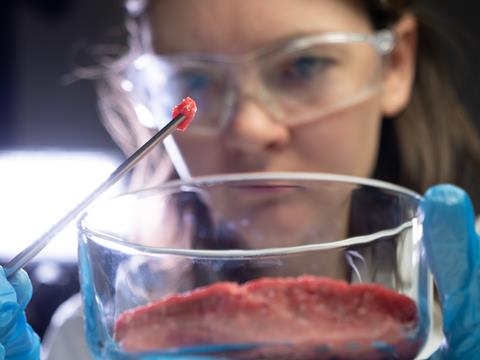
The programme brings regulators, industry and academia together to establish how existing food rules apply to cell-cultivated products. Producers create these foods by growing animal or plant cells rather than through conventional farming, although the Sandbox focuses only on animal cells.
What the new guidance covers
The latest publications form the second batch of guidance produced through the Sandbox. In December, the FSA and FSS issued the UK’s first safety guidance specifically for cell-cultivated products, outlining how producers must demonstrate that foods derived from animal cells comply with existing food regulations.
Food business hygiene requirements for cell-cultivated products explains how General Food Law and hygiene regulations apply to production. It guides businesses on managing food safety risks, maintaining hygienic facilities and meeting their legal responsibilities.
Supplementary guidance on identity, production and microbiology sets out the scientific evidence companies must provide when applying for novel food authorisation. It covers cell-line characterisation, production methods and microbiological hazards.
Improving your cell-cultivated product application offers practical advice on preparing stronger, more complete submissions. It highlights common gaps that can cause delays, including missing data, unclear process descriptions and insufficient supporting evidence.
Novel food taste trials supplementary information clarifies businesses’ responsibilities when conducting taste trials during research and development. It covers safety assessments, participant management and compliance with relevant food law.
Together, the four documents aim to make the authorisation process easier to navigate without weakening safety requirements.
“Cell-cultivated products represent a genuinely new frontier for the food industry, and we want businesses to have the clearest possible picture of what is required to bring safe products to market,” said Dr Thomas Vincent, Deputy Director of Innovation at the FSA.
”This guidance reflects the knowledge we have built through engagement with industry and academia through the Sandbox, and is designed to make the path to authorisation more transparent and efficient. Consumer safety is non-negotiable, and these documents are ultimately about reducing barriers for emerging food technologies without compromising on safety standards.”
Beyond addressing immediate regulatory requirements, the FSA expects greater clarity to support investment and help innovative food businesses scale.
FSA Chair Professor Susan Jebb added: “Developments in the innovative food sector can support a healthier and more resilient food system while also contributing to the UK government’s ambitions for a growing, modern economy. But that potential will only be realised if businesses have the regulatory clarity to invest and the confidence to scale-up. This guidance provides practical support that helps innovative companies move forward, backed by a science-led approach that protects public health.”
To provide further support, the Sandbox Programme also offers a Business Support Service, giving cell-cultivated food companies direct access to FSA and FSS regulatory experts until February 2027.










No comments yet