




The government has set out a long-term plan to improve farm profitability and strengthen the food supply chain, but the NFU warns ambition must be matched by investment.
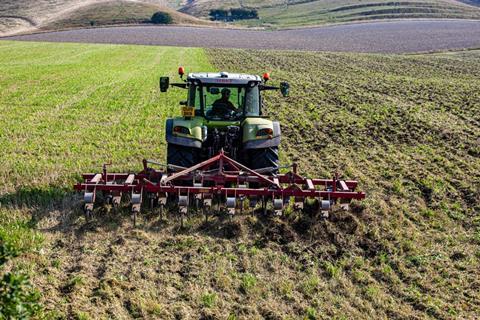
The Department for Environment, Food and Rural Affairs (Defra) has unveiled a 25-year roadmap for English farming, setting out long-term plans to improve profitability, productivity and resilience through innovation funding, supply chain reforms and investment in the sector.
The Farming Roadmap 2050: Growing England’s Future introduces a package of measures designed to improve long-term competitiveness across the sector. Key commitments include:
- £123 million for agricultural innovation this year
- Extending Seasonal Worker visas until at least 2030
- New protections for egg and fresh produce growers against unfair supply chain practices
- A new UK-EU Sanitary and Phytosanitary (SPS) agreement to reduce trade friction
- Sector Growth Plans, beginning with horticulture and poultry
For the wider food and drink sector, the roadmap is intended to strengthen the domestic supply chain through greater investment in primary production, fairer trading relationships and improved access to UK and EU markets.
Farmers feed our nation and manage the land that shapes our countryside, yet their contribution has never been valued in the way it deserves. Our roadmap marks a shift away from only looking to the next harvest and towards a plan that gives farmers the long-term clarity they need to innovate, invest and grow with confidence for generations to come.”
Environment Secretary Emma Reynolds
Turning recommendations into action
Developed in partnership with farmers, the roadmap also responds directly to recommendations made in former NFU president Baroness Minette Batters’ independent Farming Profitability Review, published in December.
The review concluded that many farm businesses lacked the confidence to invest because of short-term policy decisions, rising costs and uncertainty over future support. It warned that without clearer long-term direction and stronger collaboration between government and industry, farms would struggle to improve profitability, adopt new technology and grow.
Among its recommendations were closer partnerships across the food supply chain, greater investment in innovation and a more coordinated approach to improving the sector’s long-term resilience.
Funding remains the sticking point
Many of those recommendations are reflected in the roadmap, prompting a cautious welcome from the National Farmers’ Union (NFU). While the organisation welcomed the government’s long-term direction, it warned that ministers had yet to explain how many of the strategy’s ambitions would be funded.
“It’s good to see resilience, profitability, productivity and sustainability at its heart – all areas we’ve been urging the government to focus on, said NFU President Tom Bradshaw.
“The government is right to say that the national security context has changed. Combined with climate and economic shocks, the fragilities of our food system now feel very exposed, and we need to move rapidly into delivery mode to turn this around.”
Bradshaw continued: “However, while the roadmap is full of ambition, it falls short on action and even shorter on the means of delivery.
“The roadmap sets out a multi-year direction for farming, yet there is no long-term funding to go with it. Intent alone won’t deliver a secure and affordable supply of homegrown food for the nation, nor will it care for 70 percent of England’s landscape.
“The Treasury is conspicuously absent in this plan. Instead, it tips the balance of risk even more onto the shoulders of farmers, with much of the investment expected to come from business bank accounts which have been sucked dry over recent years due to soaring costs and unsustainably low margins.”
It’s good to see resilience, profitability, productivity and sustainability at its heart – all areas we’ve been urging the government to focus on… However, while the roadmap is full of ambition, it falls short on action and even shorter on the means of delivery.”
NFU President Tom Bradshaw
The debate comes as the sector faces rising production costs, increasingly volatile weather and pressure to strengthen domestic food security. Farmers produce around 65 percent of the nation’s food, manage 70 percent of England’s land and underpin the UK’s £153 billion agri-food sector, which is recognised as Critical National Infrastructure.
To address those challenges, Defra has also announced a package of shorter-term measures to improve farm profitability. These include stronger supply chain protections for egg producers and fresh produce growers, a new £30 million Farmer Collaboration Fund, the opening of the SFI26 application window this month and plans to reduce export friction through a UK-EU SPS agreement.
Backing innovation and resilience
Innovation forms another central pillar of the roadmap. An additional £53 million for the Farming Innovation Programme brings total funding to £123 million this year, with dedicated funding rounds focused on robotics, soil health and water management. Defra also plans to encourage greater use of co-operatives to help farmers reduce costs, spread risk through joint investment and improve returns.
Alongside investment, Defra also wants to simplify how farmers interact with government. The department plans to replace multiple government services with a single digital farming account over time. It will also work with the Office for National Statistics to develop new measures that better reflect agriculture’s contribution across the wider food supply chain, from food manufacturing and processing to distribution and retail, rather than relying solely on primary agricultural output.
Launching the strategy, Environment Secretary Emma Reynolds said: “Farmers feed our nation and manage the land that shapes our countryside, yet their contribution has never been valued in the way it deserves. Our roadmap marks a shift away from only looking to the next harvest and towards a plan that gives farmers the long-term clarity they need to innovate, invest and grow with confidence for generations to come.”
She added: “We are looking at how farming is valued economically and socially to ensure it receives the recognition it deserves.”















No comments yet