


Nestlé Waters & Premium Beverages becomes first in food and beverage industry to secure 100 percent Alliance for Water Stewardship certification, advancing water resilience through global partnerships and regeneration projects.
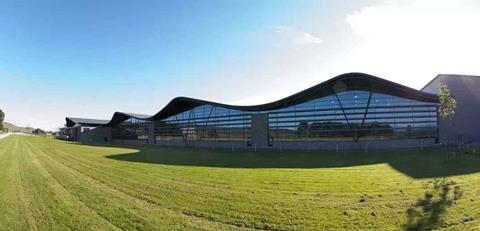
Nestlé Waters & Premium Beverages (NW&PB) has become the first food and beverage company to secure 100 percent certification of all 39 of its bottling sites to the Alliance for Water Stewardship (AWS) Standard, marking a major milestone in global water management.
The announcement spans operations across Europe, the Middle East, Africa, South America and Asia, with two sites – Buxton in the UK and Tunuyan in Argentina – achieving AWS Platinum, the highest certification level.
The AWS Standard is the only globally recognised independent framework for water stewardship, guiding how companies manage water use within factories, local watersheds and surrounding communities. The certification comes as increasing water stress and extreme weather events place pressure on global water resources, prompting greater industry focus on collective, localised action.
Muriel Lienau, CEO of Nestlé Waters & Premium Beverages, said:
We are pleased to share these significant milestones today on AWS certification and water regeneration. Good water stewardship is part of our DNA and strong water resilience is a strategic imperative for our business – that’s why we look to collaborate everywhere we operate to ensure we address any shared water challenges, now and for the future. This is something we’ve been working on for decades.”
The certification milestone follows years of investment and operational changes across NW&PB’s global network. It will also be maintained annually, reinforcing the company’s long-term commitment to sustainable water management.
Scaling water regeneration globally
Alongside certification, the business has implemented 70 water regeneration projects globally, aimed at protecting, restoring and replenishing water resources in the regions where it operates. Developed in collaboration with local partners, the projects use the World Resources Institute’s Volumetric Water Benefit Accounting methodology to ensure consistency and measurable impact.
By the end of 2025, these initiatives were regenerating 14.1 million cubic metres of water annually at a local level. As projects reach full capacity, NW&PB expects to return more water to the environment than it uses in its operations.
The company has also invested heavily in large-scale programmes in key European markets. In France, the €25 million Agrivair Garrigue initiative is protecting water resources and biodiversity in the Gard region through sustainable agriculture and habitat restoration. In Italy, the company will invest a further €40 million through to 2030 under the F.O.N.T.E programme, building on an earlier €30 million commitment to water basin protection and community support.
NW&PB is also extending its partnership with the International Union for Conservation of Nature (IUCN), following three years of collaboration. The organisation provides scientific and strategic guidance, including alignment with the IUCN Global Standard for Nature-based Solutions.
Lienau added:
We remain committed to protect, restore and return water where we operate. Water resilience has a growing awareness on the international agenda and we know no one can achieve this on their own. By partnering with experts, local organisations and communities we know that collaboration at catchment level is the key for meaningful impact.”
Adrian Sym, Chief Executive of the Alliance for Water Stewardship, highlighted the significance of the achievement for the wider industry:
In an era of increasing resource volatility, where individuals and organisations are passionate about making a difference but don’t always know how, a global independent standard that includes an accessible, independent and practical framework for water stewardship and landscape protection is essential.
Nestlé Waters & Premium Beverages’ approach to collaborative, localised, context-based solutions, tailored to each bottling site is exemplary. It’s fantastic to see a large global company approaching this bottom-up all over the world, rather than top-down or by taking a mass rebalance approach to offset water usage. In fact, NW&PB has provided invaluable learnings for driving scaled impact and is an important ally in helping us deliver on our mission to ignite and nurture water stewardship globally.”
Looking ahead, NW&PB said it will continue working with AWS and IUCN to scale its water stewardship efforts, with a focus on protecting freshwater ecosystems and strengthening long-term resilience across its global catchments.





![EcoTrophelia_009[1]](https://d1qyip7ii4bpjm.cloudfront.net/Pictures/380x253/2/2/4/14224_EcoTrophelia_0091.jpg)