




Barilla’s agronomy team on four decades of supply chain work and why regenerative agriculture is the next step for durum wheat, soft wheat and basil.
Over the past four decades, Barilla has progressively strengthened its direct engagement in agriculture, moving from quality-driven agronomic standards to a science-based regenerative agriculture approach.
In this article, Roberto Buttini – VP Global Quality & Food Safety and R&D Strategy – interviews the Barilla Agronomy Research team to highlight how sustainability has evolved across its key supply chains – from durum wheat to soft wheat and basil – and why regenerative agriculture represents the next strategic step for resilient food systems.
Roberto: Why does a food manufacturing company like Barilla invest so heavily in agricultural practices upstream?
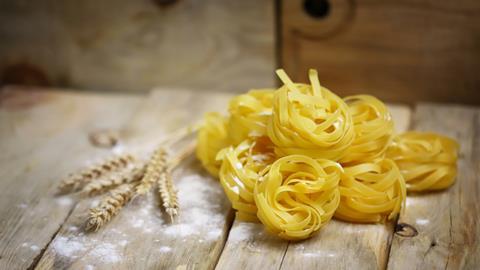
Marco: Product quality is inseparable from ingredient quality – and for agricultural raw materials this depends entirely on how crops are grown. In the case of pasta, for example, quality is built in the field. Colour, protein functionality, safety and consistency cannot be fully corrected during processing if they are not addressed at farm level. This awareness led Barilla, early on, to work directly with farmers, defining agronomic practices that safeguard quality, food safety and environmental performance. Caring about cultivation methods ultimately means caring about the performance of our finished products.
Roberto: Durum wheat has historically been central to this approach. How did this journey begin?
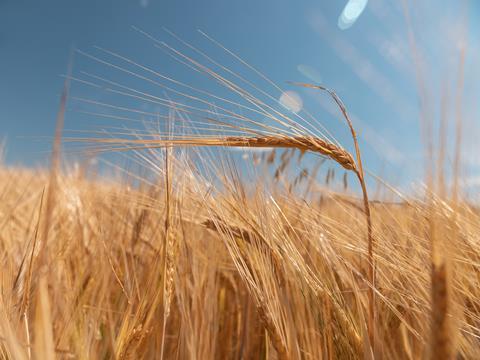
Marco: The Durum Wheat Production Handbook has been the backbone of Barilla’s agronomic development. Created in the early 1990s alongside the company’s first exclusive durum wheat variety – developed to produce a more golden, higher-quality pasta – it was one of the first technical documents to integrate agronomic criteria, sustainability and food safety. This framework laid the foundations for integrated and sustainable agriculture well before these concepts became widespread. Over time, the charter evolved, incorporating new agronomic knowledge, innovative integrated farming practices, predictive models, storage guidelines and increasingly advanced agronomic recommendations, together with stricter safety requirements and sustainability criteria.
Roberto: How has technology supported the evolution of these agricultural standards?
Marco: Technology has been a key enabler. Since the late 1990s, we have invested in agrometeorological monitoring, yield forecasting and disease risk models, particularly for Fusarium and mycotoxins. Initially developed locally in Italy, models have subsequently been extended to international supply chains. Today, satellite data, decision support systems and machine-learning models assist farmers and storage operators in managing agronomic and climatic risks with greater precision. The development of those predictive models is a strategic tool for Barilla to proactively mitigate the risk of mycotoxin contamination and assure the quality of supply. This combination of sustainability and advanced technology is a defining feature of our approach.
Roberto: Storage and logistics are often overlooked in sustainability discussions. How do they fit into your system?
Marco: Storage and transport are critical elements of food safety and quality management. Improper storage can lead to insect infestation and mould development, increasing the risk of mycotoxins and residues from post-harvest treatments. Our handbook therefore prioritises the use of preventative physical methods and strictly limits the use of chemical solutions. Transport is also regulated to preserve quality and traceability. Moreover, these rules were instrumental for the development of cultivation contracts and the integrated supply chain system that Barilla pioneered. Contracts provide stability, encourage investment and foster innovation across the entire supply chain.
Roberto: Basil represents another strategic raw material. How has sustainability evolved?
Flavio: Basil became strategically important in the early 1990s with the development of Pesto. Initially sourced through traders, the supply chain faced increasing challenges due to climate change and severe fungal diseases. From 2012 onwards, Barilla launched dedicated projects with research centres and universities to improve both agronomic practices and raw material quality. A major milestone was reached in 2020 with the introduction of the Carta del Basilico. This charter defines specific agronomic standards that preserve the freshness and colour of basil while committing Barilla to sustainability and multi-year contracts that support investments in cold storage, machinery and disease prevention systems based on satellite data and artificial intelligence (AI). Advanced technologies and varietal innovation play a crucial role in this evolution. Developed in 2025, Accademia del Basilico represents another milestone: a learning platform dedicated to customers and farmers that ensures continuous improvement in the cultivation of high quality basil, which in turn protects biodiversity, respects the soil and supports farmers’ communities.
Rather than reducing greenhouse gas emissions or the use of pesticides, regenerative agriculture focuses on the health of the soil and promotes biodiversity, improving the resilience of agricultural systems.
Elena Berté, biologist, R&D department, Barilla
Roberto: Soft wheat followed a different path, culminating in regenerative agriculture – an evolution of sustainability. What changed?
Elena: The first soft wheat guidelines were introduced in the mid-2000s, inspired by the durum wheat model, but they were not yet linked to structured supply contracts. A major shift occurred around 2017 with the development of the Carta del Mulino, involving farmers, storage operators, universities and partners such as WWF. This initiative resulted in the launch of soft wheat from sustainable agriculture in 2019 and it triggered a broader reflection on how to move beyond conventional sustainability towards regenerative agriculture.
Roberto: What does regenerative agriculture mean for Barilla in practical terms?
Elena: Regenerative agriculture represents an evolution of sustainability. Rather than reducing greenhouse gas emissions or the use of pesticides, regenerative agriculture focuses on the health of the soil and promotes biodiversity, improving the resilience of agricultural systems. It includes targeted practices such as crop rotations – which return nutrients to the soil and promotes its natural fertility – plant cover during periods of crop rest to protect the soil, the creation of flowering areas dedicated to bees, butterflies and other beneficial insects, and the use of digital technologies to monitor impacts and constantly improve practices.
At the end of 2025, Barilla launched the first certified biscuit entirely produced with soft wheat flour from regenerative agriculture, Buongrano, under the Mulino Bianco brand. This launch marks the start of a new phase. The Carta del Mulino now involves over 48,000 hectares cultivated by 1,800 farmers. By 2030 all the Mulino Bianco products will be made with soft wheat flour obtained from regenerative agricultural practices.
Roberto: Looking ahead, how do you see regenerative agriculture shaping the future of Barilla’s supply chains?
Marco: Regenerative agriculture is not a final destination but a continuous improvement pathway. As climate pressure intensifies, resilient and measurable agricultural systems will become essential for food safety, quality and supply security. Our goal is to progressively scale regenerative practices across key supply chains, supported by science, technology and strong partnerships. By doing so, we aim to create value that is shared – environmentally, economically and socially – while ensuring high quality ingredients for future generations.
Roberto: Barilla’s journey demonstrates how sustainability and innovation serve as both technical and strategic drivers for building resilient supply chains. From the first durum wheat guidelines to today’s digital tools, the direction is clear: regenerate soils, support farmers and deliver superior quality to consumers.










No comments yet