



Chris Elliott delivers a sobering blow that we may not want to face but will be impossible to ignore. How familiar are you with El Niño?
Over a recent coffee with a good friend and senior food industry insider, when chatting, he raised the topic of the pending El Niño. I had to admit I was totally unaware of this weather event on the horizon. But as we discussed the impacts of the Ukraine and Iran wars on the food system, on top of ‘the world’s weather disruptor’, the conversation turned far more serious than intended.
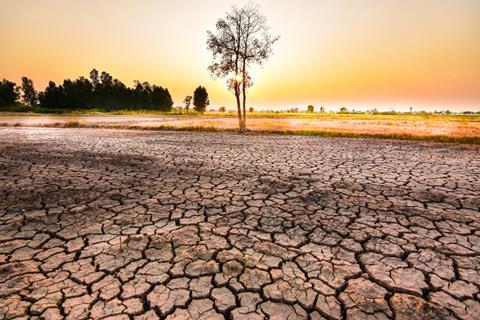
I resolved to investigate the historical impacts of El Niños and found that few other natural phenomena have shaped the global food system as profoundly, or as consistently. For centuries, this recurring climate pattern has delivered major shocks to agriculture, fisheries and food supply chains across the world. Its signature is recurrent: disrupted rainfall, failed harvests and collapsing fisheries all leading to rising food prices and availability issues. Yet it seems, despite many generations of experience, the world remains dangerously unaware of and highly exposed to its impacts. As forecasts increasingly point to the emergence of another El Niño in 2026, the global food system may be approaching yet another serious stress test.
Few other natural phenomena have shaped the global food system as profoundly, or as consistently, as El Niño.”
El Niño is a natural climate phenomenon characterised by the sustained warming of sea surface temperatures in the central and eastern equatorial Pacific Ocean.
This major climate event has enormous capacity to destabilise food production. The Food and Agriculture Organization (FAO) has repeatedly highlighted that El Niño-driven climate hazards – particularly droughts and floods – pose significant risks to agriculture and rural livelihoods by disrupting rainfall and temperature patterns on which crop production depends.
When I looked into the historical footprint of El Niño on food production I found it stretches back many centuries, but its global significance has become far greater in the modern era as global trade networks have expanded and the world’s population has grown substantially. When rainfall patterns shift crops fail. The regions that depend most on seasonal rains, such as Africa, Asia and parts of Latin America, become acutely vulnerable very quickly. These shocks proceed to propagate through the global food chain with the most impacted being the least affluent in developing countries who rely heavily on rain-fed farming. These communities are continually trapped in cycles of poverty and food insecurity.
One of the most striking examples of El Niño’s destructive potential that I discovered occurred during the early 1990s. The 1991–1992 El Niño triggered severe drought conditions across Southern Africa, virtually halving cereal production across the region. Imports doubled, food aid requirements surged and millions of people faced famine conditions. In total, around18 million people were estimated to be affected by the resulting food shortages.
Ocean warming is also closely linked to El Niño and causes large-scale disruption of marine ecosystems across major fishing regions. According to FAO assessments, strong El Niño events between 1950 and 2023 affected marine fisheries in roughly half of the world’s major fishing areas, highlighting the scale of risk posed to global protein supplies.
The globalisation of food systems has served to amplify all these vulnerabilities. A drought or flooding in one part of the world can influence prices and availability worldwide. Despite the numerous benefits to modern food systems, the degree of interconnectedness and interdependence can render it unstable and this fragility is becoming more pronounced as climate extremes intensify. A very recent joint United Nations warning highlighted that extreme heat and climate stress are pushing global food systems towards critical thresholds. Crop yields for staple commodities such as maize and wheat are already declining in several regions due to rising temperatures and prolonged heatwaves, while ocean warming threatens fish populations that sustain millions of livelihoods.
Against this backdrop, forecasts for 2026 are attracting increasing concerns. Climate modelling from leading forecasting centres suggests a strong probability that El Niño conditions will develop during mid to late 2026 and persist into early 2027. With this will come the same, if not worse, widespread climate anomalies that will bring droughts and flooding to many parts of the world. Some forecasts are suggesting the possibility of a particularly strong ‘super El Niño’ event emerging late this year, which will have even more devastating impacts on global food security.
I firmly believe this collision of natural and man-made events represents one of the most serious threats to global food security in living memory.”
What makes this prediction especially concerning is not just the weather risk but its timing. The world is already grappling with significant geopolitical disruption linked to conflict involving Iran and instability across key shipping routes. Accounting for these factors, outlined in my recent article, alongside the predicted impacts of El Niño, I firmly believe this collision of natural and man-made events represents one of the most serious threats to global food security in living memory – with likely devastating consequences reverberating across harvest cycles for between three to five years.
How this convergence plays out in practical terms represents a classic compound risk scenario. Crops face drought or water stress at the same time that fertiliser becomes scarce. Logistics networks struggle with rising fuel costs, farmers delay planting decisions, already stressed supply chains start to collapse and food prices soar. These will in turn likely fuel widespread hunger, mass displacement and escalating social and political unrest across vulnerable regions that could reshape political stability in multiple regions across the world. If history is any guide, the coming years will test the resilience of global food systems in ways that few, including myself, can fully anticipate.
The merging of climate risks and geopolitical instability represents a defining challenge for our era. Over the past few years, I have written numerous articles warning about the increasing fragility of the global food supply system and mounting pressures being placed upon it. Yet, for many readers, supermarket shelves remain reasonably well stocked, albeit at a noticeably higher cost than only a few years ago. This can understandably create the impression that such warnings from myself are alarmist. My pushback to this is that these articles are not intended to scare people; they are collectively pointing to the disastrous trajectory we are now firmly on unless decisive action is taken. The reality is that rising food prices are often the first visible symptom of deeper systemic strain – the very opposite of resilient.
I have been attempting to highlight the unmistakable signals that pressures on the global food system are intensifying and that, without recognition and coordinated action at both national and international levels, we risk moving from a period of severe strains into one of genuine crisis. In my opinion, it is essential that governments, international agencies and the food industry recognise that the level of resilience planning must increase in magnitude and speed – this is not just a wise option but a vital necessity. When the devastating impacts of El Niño hit, the real question may not be whether the risks were known, but whether they were actually confronted or left in the ‘just too difficult to deal with’ box.









No comments yet