



McGill University research shows cold plasma treatment cuts peanut allergenicity by nearly 70 percent, potentially enabling safer ingredients for foods.
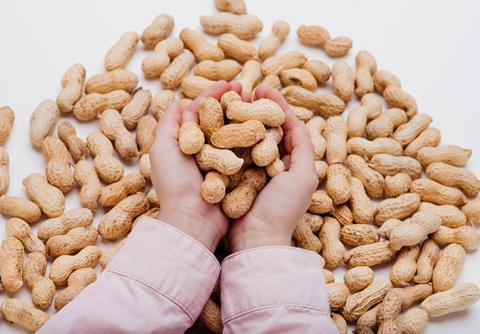
Treating peanuts with cold plasma could significantly reduce their allergenicity, according to new research from McGill University, potentially enabling food manufacturers to develop safer peanut-based ingredients.
Laboratory tests showed the treatment reduced peanut protein immunoreactivity by nearly 70 percent after 25 minutes, suggesting the technology could limit allergic responses while preserving functional properties valued by product developers.
Peanuts are a major source of plant protein globally and play a key role in many food formulations due to their emulsifying and binding properties. However, their status as one of the most common food allergens presents a persistent challenge for manufacturers seeking to balance functionality with consumer safety.
Cold plasma – an ionically charged gas capable of triggering chemical changes – alters the structure of peanut proteins, the component responsible for provoking immune reactions. The treatment also improved functional characteristics relevant to food processing and made the proteins easier to break down during digestion.
The research was led by Jin Wang, now a Professor at Southeast University in China, during his doctoral studies at McGill.
It’s clear this research benefits consumers with food allergies – it means they may have more food choices in the future.
Importantly, this approach isn’t limited to peanuts; it could also be applied to other allergens such as eggs, hazelnuts and more, potentially significantly reducing allergy risks across a wide range of foods.”
Vijaya Raghavan, study co-author and Professor of Bioresource Engineering at McGill University
Testing peanut proteins with cold plasma
Efforts to reduce peanut allergenicity have traditionally relied on heat-based processing methods, which can alter flavour, aroma and appearance. Other non-thermal approaches, including irradiation, have produced inconsistent results.
To explore an alternative approach, the research team extracted the full protein content from peanuts and treated it with cold plasma before assessing allergenic potential using multiple in vitro laboratory techniques.
In real-life scenarios, consumers are exposed to the complex mixture of proteins present in whole peanuts, rather than isolated individual allergens.
Our study focused on whole peanut protein and achieved a nearly 70 percent reduction in overall immunoreactivity after 25 minutes of cold plasma treatment.”
Vijaya Raghavan, Professor of Bioresource Engineering at McGill University
The findings suggest food developers could incorporate hypoallergenic peanut protein powders into new formulations without sacrificing key functional properties.
Potential applications beyond peanuts
Beyond peanuts, the technology could help reduce allergenicity in other ingredients. The study found nitrite levels increased during treatment, suggesting nitrite may play a more dominant role in modifying protein structure – an aspect often overlooked in many applied studies.
The research team now plans to investigate these mechanisms further and optimise the treatment process to improve efficiency.
We hope to expand the desensitisation effect beyond peanuts to a wider range of food allergens.
By developing hypoallergenic ingredients with enhanced functional properties, we hope to serve a broader consumer base while maintaining food safety and quality.”
Vijaya Raghavan, Professor of Bioresource Engineering at McGill University















No comments yet