



Global shockwaves through the food system serve to illustrate our true proximity to global conflict. Professor Chris Elliott reflects on the actions we must take to protect food supplies against these external shocks.
The dreadful events unfolding in the Middle East in 2026 offer a stark reminder that the global food system is not insulated from geopolitical shocks. What happens in distant maritime chokepoints can, within days, influence food prices, farm productivity and ultimately the availability of food on supermarket shelves thousands of miles away. For those of us working in food security and supply chain resilience, the message we have been trying to deliver for some time could not be clearer: food security is now inseparable from national security.
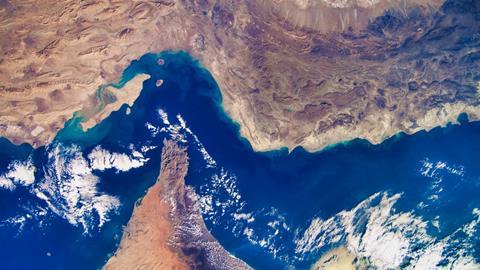
The recent conflict has impacted the entire Persian Gulf region and delivered a profound shock to global agrifood systems, despite only lasting a number of weeks. Hopefully the ceasefire will hold and the negotiations are successful, but when I speak with collaborators in the Gulf they are far from confident this will be the case. Who thought we would be listening to daily reports about the Strait of Hormuz and its growing impact on the world’s economy? Certainly, it did not seem to be on Donald Trump’s radar. But it was on mine from the very start of the war. As I pointed out, it is one of the world’s most strategically important maritime corridors, which under normal circumstances carries around 20 million barrels of oil per day – roughly a quarter of global seaborne oil trade – alongside very large volumes of natural gas and fertilisers. Within days of the start of the war, tanker traffic collapsed by more than 90 percent, triggering an immediate instability in energy markets and large ripple effects across agriculture worldwide.
For those of us working in food security and supply chain resilience, the message we have been trying to deliver for some time could not be clearer: food security is now inseparable from national security.”
These disruptions are such a clear and unequivocal demonstration of how deeply interconnected energy, fertiliser and food systems have become. Oil prices surged rapidly, reaching $120 per barrel, and natural gas prices rose sharply in the early weeks of the crisis. It should have been obvious to all, from what transpired from the invasion of Ukraine, that such energy shocks quickly infiltrate the food system through rising transport costs, increased input prices and heightened production risks for farmers.
I firmly believe that the most significant risk lies in global fertiliser supplies. What seems to be less well understood or at least reported is that fertilisers are one of the foundational pillars of modern agriculture. The Gulf region accounts for an estimated 30–35 percent of global urea exports and 20–30 percent of ammonia exports – both essential ingredients of fertilisers. Unlike oil, there are no co-ordinated international fertiliser reserves, so a virtually immediate reduction in fertiliser application in many countries has been apparent. It is also fairly obvious that as a direct consequence of this shortage lower crop yields months later will result, further tightening food supply and driving up prices.
I recently read a report from the FAO, which provided the most accurate information about the impacts of the Iranian war that I have seen. It is particularly alarming that farming systems in multiple regions of the world could be pushed to the brink of collapse if the current pressures persist. This is not just about rising prices, but fundamental production viability. When the cost of production exceeds the potential value of harvests, farmers, like any other business, face the tough choices of reducing inputs or ceasing operations. This threat is particularly acute in regions that depend heavily on imported fertilisers. The disruption of roughly one-third of global fertiliser trade has left nations across Asia, Africa and Latin America scrambling to secure alternative supplies. In countries such as Bangladesh, India and parts of East Africa, the combination of high fertiliser dependency and intensive crop production has created a dangerous dual vulnerability. If fertiliser application rates decline significantly, as seems to be the case already, crop yields and thus food availability will fall sharply in the following growing seasons.
The disruption of roughly one-third of global fertiliser trade has left nations across Asia, Africa and Latin America scrambling to secure alternative supplies.”
Perhaps most concerning is the systemic risk posed by major agricultural exporters. Countries such as Brazil, which play a central role in global supply chains, are particularly exposed due to their reliance on imported fertilisers. If Brazilian farmers scale back use due to cost or availability constraints, crop yields will decline significantly, transmitting shocks directly into global markets.
Another important dimension of this crisis is the role of biofuels. As fossil fuel prices increase, demand for biofuel feedstocks such as maize, soybean oil and palm oil rises. This tightens global supply chains further by diverting crops from food to fuel production. The Gulf states themselves face unique vulnerabilities. Many rely on imports for between 70 and 90 percent of their food supply, making maritime access to international markets absolutely critical. Even stockpiles of food provide only short-term relief if trade routes remain blocked.
I don’t wish to be the harbinger of doom but when I look at my own ‘Five Warning Signs of Global Farming Collapse’ I see too many of these boxes being ticked:
1. Rapid reduction in fertiliser use across multiple countries
2. Rising farmer debt and liquidity crises
3. Major exporting nations cutting production
4. Persistent energy price volatility
5. Growing dependence on emergency imports.
The UK context: building a truly resilient national food system
While global shocks may originate thousands of miles away, their consequences are felt very quickly in the UK. The UK imports approximately 40–50 percent of the food it consumes, making it particularly vulnerable to disruptions in international markets. The wars in Ukraine and Iran should therefore be viewed not as distant geopolitical turbulence but as a direct warning signal in terms of national resilience threats.
Prime Minister Sir Keir Starmer voiced this sentiment by stating that the UK needs a long-term plan to make our country more secure and more resilient to shocks. Myself and other commentators firmly believe this must include food security at its very core.
Historically, UK food policy has focused heavily on efficiency and cost competitiveness. While these remain important, it is vital to balance these aspects with resilience. The pursuit of lowest-cost sourcing has created long, complex and sometimes fragile supply chains. After speaking with a trusted food industry insider this week, it is abundantly clear, from an industry perspective, that the era of ‘just-in-time’ supply chains is incompatible with the need to maintain a secure and resilient UK food system.
It’s impossible for the UK to be immune from the global farming stress that I have described. A collapse or contraction of farming capacity in key exporting regions will inevitably reduce global supply and increase import costs. The Food and Drink Federation has predicted food prices will rise by around 9 percent by the end of this year. This will inevitably result in severe hardship for many families as well as increased political unrest.
Food security must be treated with the same seriousness as energy security, cyber security and military defence.”
One of the most urgent priorities for the UK Government is the development of a comprehensive National Food Security Strategy that aligns with national defence and economic resilience planning. Domestic food production must be strengthened with substantial investment in sustainable farming systems, better soil health and improved water management. Renewable energy-driven fertiliser production within the UK must also form part of a long-term resilience agenda. The diversification of import routes and suppliers is another essential measure and – as I have stated before – we should look to new partnerships in Africa
The lessons from the 2026 Middle East conflict are clear: food security must be treated with the same seriousness as energy security, cyber security and military defence. I believe Sir Keir Starmer deserves much credit for his leadership role internationally in both the Ukraine and Gulf conflicts. His ‘words of wisdom’ about our national resilience need to be translated into clear and urgent action in terms of food security. Our government and the agri-food industries must now work collectively to deliver a fully integrated National Food Resilience Plan. One that will anticipate shocks, strengthen multiple supply chains and safeguard the nation’s food security against the ever-growing spectrum of global threats. This is a pivotal moment in our nation’s history, when the resilience of the UK food system must be recognised as fundamental to the strength and security of the country itself.










No comments yet