



The UN’s Food and Agriculture Organization has warned that food loss and waste is placing mounting pressure on the world’s forests, generating 10 percent of global greenhouse gas emissions.
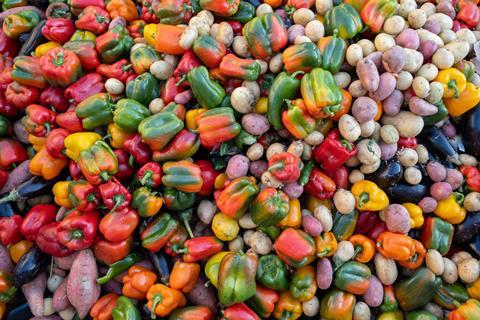
Food that is never eaten is consuming an area of agricultural land roughly equivalent to the combined size of the United States and India, according to the UN’s Food and Agriculture Organization (FAO).
Around 1.4 billion hectares are used to grow food that ultimately goes uneaten, putting additional pressure on land and forests at a time when agriculture remains the leading driver of global deforestation.
The figure comes as FAO and the UN Environment Programme (UNEP) push food loss and waste higher up the environmental agenda, linking the issue to forest protection, climate change and access to nutritious food.
A huge hidden land footprint
The scale of food waste is visible at several stages of the food system. About 13.4 percent of food produced worldwide is lost between harvest and retail, while another 19 percent of food available to consumers is wasted in shops, restaurants and homes.
That means resources used to grow, transport and process food are also being spent on food that never reaches a plate.
The climate impact is substantial. Food loss and waste account for around 10 percent of global greenhouse gas emissions. Once discarded food reaches landfill, decomposition under oxygen-free conditions can produce methane, adding another source of warming emissions.
The losses are particularly significant for nutritious produce. Fruits and vegetables experience some of the highest rates of food loss, meaning that reducing waste could also increase the amount of healthy food available to consumers.
“To protect forests, we must transform agrifood systems; to transform agrifood systems, we must reduce food loss and waste; and by reducing food loss and waste, we help safeguard forests,” Qu said.
Little progress since 2015
Despite years of international commitments, the amount of food lost before reaching consumers has shown no apparent reduction since 2015.
The lack of progress puts the UN’s 2030 target further out of reach. Sustainable Development Goal target 12.3 calls for food waste per person at retail and consumer level to be halved, while also seeking reductions in food losses across production and supply chains.
For policymakers, one obstacle is knowing precisely where losses occur and how large they are. FAO has therefore released a new interactive Food Loss Index map containing 2024 estimates for regions and subregions.
The dataset is designed to give governments and researchers a clearer picture of food losses and provide evidence for decisions on where interventions could have the greatest effect.
The map will remain available through FAO’s Technical Platform on the Measurement and Reduction of Food Loss and Waste.
The agency is also working with countries and other partners on measurement and policies intended to keep more food within the food system.



No comments yet