



Nestlé-backed AI pilot identifies surplus food in real time, helping manufacturers cut waste and redistribute nearly 500,000 meals.
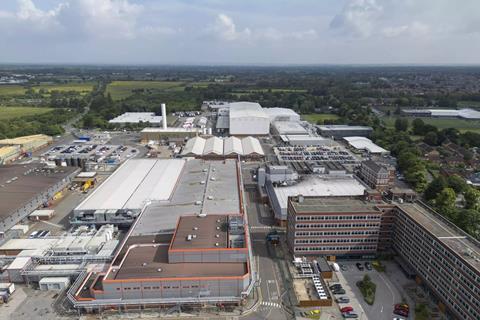
Nestlé and industry partners have used AI to identify and redistribute nearly 500,000 meals worth of surplus food from manufacturing lines in a major UK pilot tackling food waste.
The 16-month project used artificial intelligence to map food waste on production lines in real time, allowing manufacturers to pinpoint losses and redirect unavoidable surplus to charities. In total, the initiative redistributed the equivalent of 499,863 meals, supporting an estimated 94,133 people across 787 charities and community organisations.
The pilot brought together a nine-partner consortium including Nestlé UK & Ireland, Company Shop Group, FareShare, Sustainable Ventures, Howard Tenens and Zest, alongside Bristol Superlight and FuturePlus. Backed by a £1.9 million match-funded BridgeAI grant from Innovate UK, the project tested whether AI could help manufacturers better visualise, reduce and redistribute surplus food.
Food waste remains a major operational and sustainability challenge for the sector. In 2021, UK food manufacturers generated just under 2.1 million tonnes of food waste and surplus, yet fragmented datasets across factories often make it difficult to identify exactly where losses occur.
AI reveals hidden food waste across manufacturing lines
The pilot addressed this challenge using Zest’s AI technology built on Google Cloud, which connected previously siloed datasets from Nestlé’s manufacturing operations. By analysing data from a production line in real time, the system mapped where waste and surplus were being generated and highlighted opportunities to reduce losses or redirect edible food.
Early comparisons suggest AI could significantly improve the speed, accuracy, consistency and predictability of food waste analysis compared with traditional manual assessments.
Trials conducted during the project showed the AI-led process halved the time required for manual waste analysis while quadrupling the amount of surplus food identified and redistributed.
Once identified, Zest’s redistribution platform used AI-optimised algorithms to match surplus food from four Nestlé manufacturing sites with the real-time demand and capacity of redistribution organisations Company Shop Group and FareShare.
Logistics partner Howard Tenens tracked and delivered the surplus food, ensuring it moved safely from Nestlé sites to FareShare’s national charity network.
Surplus redistribution delivers measurable impact
The project delivered several measurable operational and redistribution impacts.
- 4.8 tonnes of edible food surplus were newly identified on a production line and redirected for human consumption rather than animal feed, increasing revenue from surplus 15-fold.
- 201.9 tonnes of surplus food were redistributed to people – equivalent to 480,529 meals – with a potential retail value exceeding £1 million.
- The redistributed food supported 94,133 people through hundreds of charities and community groups.
Claire Antoniou, Head of End to End Transformation Nestlé UK & Ireland, said: “It’s been fantastic to be part of this pilot project which has helped us turn data into action, reduce food waste while strengthening our ability to redistribute surplus food to where it’s needed most. This exciting cross-industry initiative could go on to benefit a whole industry.”
The consortium’s findings are outlined in a new white paper from Sustainable Ventures titled On the table: Scaling AI-led food waste and surplus visibility, reduction and redistribution, which sets out how the approach could be expanded across the wider food manufacturing sector.
The report recommends that manufacturers adopt AI-driven data platforms to improve operational visibility and reduce waste, while also developing a single redistribution platform to better connect manufacturers with surplus food redistribution organisations.
It also highlights the importance of collaboration between large food businesses and climate-tech innovators in accelerating practical solutions to sector-wide challenges.
Dini McGrath, Founder and CEO of Zest (formerly The Wonki Collective), said: “At Zest, we are realists; while some surplus in manufacturing is inevitable, leaving it unmanaged is a choice the industry can no longer afford to make. We were fortunate to find a partner in Nestlé who shares our vision for a more resilient food system, and with the support of the FDF and its members, we have de-risked a new-to-market solution that is already delivering results. By acting as an ‘AI factory intelligence layer,’ Zest unifies siloed data to help manufacturers make better decisions in real-time. This £1.9 million BridgeAI project proves that eradicating waste is no longer just ‘the right thing to do’, it is a fundamental business imperative for any manufacturer looking to remain competitive in an increasingly margin-constrained market.”
With manufacturers under growing pressure to cut costs, reduce waste and improve sustainability performance, the pilot highlights how AI-driven data visibility could help the food sector unlock greater value from surplus while reducing waste at scale.








No comments yet