

Queen Mary University of London’s RipenAI handheld sensor gives winemakers instant grape ripeness data, improving harvest planning and quality.
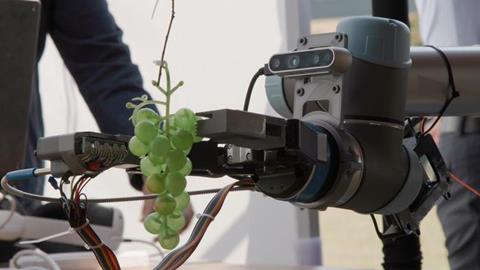
A handheld AI-powered grape ripeness sensor developed at Queen Mary University of London could help Britain’s rapidly expanding wine industry make more informed harvest decisions.
Scientists Prof Lei Su and Dr Xuechun Wang have invented RipenAI, a portable optical sensor that provides instant, accurate ripeness readings directly on the vine. The technology removes the need for slow, labour-intensive sampling and destructive testing, giving vineyards real-time data at the crucial moment of harvest.
Dr Xuechun Wang, a post-doc researcher at Queen Mary University of London who specialises in applying machine learning algorithms to building intelligent sensors, explained:
Our technology uses optical sensors to detect how grapes absorb and reflect different wavelengths of light. As grapes ripen, their chemical composition changes, which alters their optical response. By analysing these spectral patterns using AI algorithms, we can estimate grape ripeness directly on the vine, without damaging the grape.”
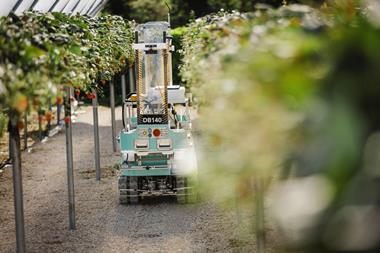
RipenAI is designed to be used either as a handheld tool for grape pickers to check bunches immediately before harvesting or installed across vineyards to monitor ripeness and crop health continuously. The team is also exploring integration into robotic grape picking systems through a related collaboration with Extend Robotics, Saffron Grange Vineyard and other Queen Mary researchers.
Supporting smarter harvest decisions
RipenAI could give vineyards faster, non-destructive insight into ripeness across large sites, reducing reliance on manual sampling and helping growers make more confident harvest decisions.
Nick Edwards, Director at Saffron Grange Vineyard, said:
Harvesting grapes at the right time is one of the most important decisions a grower makes when producing the best quality wine… It is essential that grapes are picked at their correct level of ripeness.
RipenAI will support this approach by providing non-destructive, real-time insight into grape ripeness across our vineyard.
The ability to repeatedly assess the same bunches throughout the ripening period will deliver an even clearer picture of ripeness progression than traditional destructive sampling. A handheld device will also deliver instant results significantly reducing the labour and time required for sampling, testing and analysis.”
Picking at the optimal moment can also reduce the need for later winery interventions, such as adjusting acidity or adding sugar, helping producers achieve higher-quality sparkling wines with minimal processing.
Professor Lei Su, Professor of Photonics at Queen Mary University of London, added:
RipenAI will shape the future of smart harvesting for a growing industry where timing and precision is the difference between success and failure.”
Following encouraging early field trial data, the researchers are now seeking more vineyards, agritech companies and fruit orchards to help test a new prototype during the next harvest season.