




As pressures on the global food system grow, fermentation is being repurposed as a tool for more sustainable and resilient food production. Shirin Bamezai, PhD candidate in synthetic biology at Imperial College London, and Rodrigo Ledesma-Amaro, Director of the Bezos Centre for Sustainable Protein, examine how advances in synthetic biology are transforming this ancient practice for the future of food.
For millennia, humans across the globe have relied on fermentation to transform raw harvests into long-lasting, flavourful and nutritionally dense foods, ranging from staple products such as bread and yoghurt to fermented legumes and meats, alcoholic beverages and specialty products such as vinegar, coffee and soy sauce. Today, the same principle is being reimagined through the field of synthetic biology, as a tool for a food system that can effectively support human and planetary health.
Food systems encompass the entire lifecycle of foods – from production to processing, packaging, retail and consumption, as well as the waste generated at every point in the process.1 They affect all life on Earth, from the ecological processes they shape, to the ∼1.5 billion producers they involve (with one-third being smallholder farmers managing less than 2 hectares of land)2 and the billions they feed. Food is the single most significant factor in addressing both human health and the environment.3 The global food system is responsible for around a third of greenhouse gas emissions (GHGs)4 and an estimated 22 percent of deaths globally result from poor diets.5 While our system of food production takes a toll on our environment by contributing to climate change, healthy diets remain unaffordable to 38 percent of the world’s population.6 while its inefficiencies also contribute to hunger and a global epidemic of diet-related non-communicable diseases (NCDs) such as diabetes, cardiovascular disease and obesity.7 Mounting challenges, including climate disruption, diminishing land availability and strained natural resources, in turn threaten the ability of the global food system to serve its function. Within this context, transformation towards sustainable and resilient food systems has taken on new urgency.
Fermentation technologies coupled with advances in synthetic biology offer tools to help meet that goal: they can extricate protein production from arable land, compress growing cycles from seasons to days and tailor nutrients with precision.”
When scaling up reached breaking point
Until the 1960s, meeting increasing food demand was possible primarily through the expansion of agricultural land. However, since the world population surpassed four billion, food security has become dependent on the intensification of farmed land.8 The Green Revolution, which combined new seed varieties, fertilisers and irrigation, enabled a boom in production such that, as the world’s population reached 5 billion, rice yields grew by 32 percent and wheat by 51 percent.8 If the twentieth century measured food security in bushels per hectare, the twenty-first must measure it in resilience. Yield alone cannot protect against the impacts of crop failures driven by heat and drought, nor from supply chains strained by conflict, pandemics and energy shocks. A resilient food system is one that can absorb these disturbances, adapt to shifting conditions and still deliver safe, affordable and nutritious food in accordance with the three dimensions of sustainable development: economic, social and environmental.9,10
Fermentation – hiding in plain sight
Fermentation technologies coupled with advances in synthetic biology offer tools to help meet that goal: they can extricate protein production from arable land, compress growing cycles from seasons to days and tailor nutrients with precision. Yet their promise hinges on more than strain engineering capability or fermentation capacity. The question is whether we can integrate, scale and govern these tools in ways that are equitable, energy-efficient and responsive to local food needs or critically whether, like past agricultural revolutions, their benefits will arrive unevenly and at ecological cost.
In the modern age, fermentation processes playing a role in the food system can be defined as:11
- Traditional fermentation: microbes are grown on raw ingredients such as milk or grains, transforming them to improve shelf life, flavour and texture, and conferring health benefits – think sourdough bread or kimchi
- Biomass fermentation: microbes are cultivated to be eaten as a high‑protein or otherwise nutritious food. Mycoprotein products on supermarket shelves today, such as Quorn, fall into this category.
- Precision fermentation: microbes are used as ‘cell factories’ in large vessels called bioreactors to make specific molecules, including proteins, fats, flavours and vitamins, otherwise traditionally sourced from plants or animals. A key difference from other fermentation technologies is that in precision fermentation the target product is separated from the microorganism and purified for use in food products. The microorganisms used may or may not be genetically modified. Microbial biomanufacturing entered the food industry in the 1990s with precision-fermented chymosin, an enzyme in rennet essential for cheesemaking, previously only possible to source from calf stomachs.12
What distinguishes the newer waves of fermentation technology from their ancestral roots is not simply the vessel and scale at which microbes grow, but the level of control scientists now wield over them. The development of precision fermentation in particular has been engendered by synthetic biology. Also known as engineering biology in the UK, synthetic biology is a field born from the application of engineering approaches to the study of cells and biological processes.13 Within this framework, biological phenomena are modelled as circuits composed of different parts which, once linked together, can be used to program a cell to produce a given desirable function. As libraries of parts have expanded, toolkits have advanced, diverse microorganisms have been domesticated and DNA sequencing and gene synthesis have become more accessible, the possibility of developing creative solutions to myriad global challenges has become increasingly within reach. Synthetic biology enables scientists to design microbial systems, determining what they produce, how robust they are to changing conditions and how efficiently they use inputs such as carbon, nitrogen and energy.
Precision fermentation – the tractable food solution
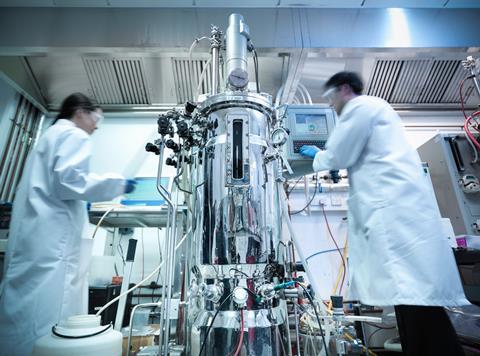
Today, precision fermentation is being used to produce milk and egg proteins without cows or hens, human-milk oligosaccharides for infant nutrition, safer biocontrol agents to protect crops from pests and materials for biodegradable and intelligent food packaging.14,11,15 Thus these technologies offer the prospect of decoupling at least part of our food supply from climatic variability and ecological strain. From a resilience perspective, bioreactors offer a striking advantage: they enable food production in any location with access to electricity, water, air, feedstock and skilled labour. Shorter supply chains and localised production models could help food systems absorb and recover from shocks more effectively. Yet biological feasibility does not automatically translate into food system transformation. Bioreactors require substantial capital investment, reliable energy inputs and consistent feedstocks – often derived from agricultural sugars. The environmental performance of fermentation processes depends heavily on how those inputs are sourced and how facilities are integrated into regional economies. The technoeconomics of bioprocesses – both biomass and precision fermentation-based – are often challenging, resulting in final products that struggle to be cost-competitive with what is already available. As industrial applications of fermentation technologies expand and scale, this might be the moment to consider how fermentation-based solutions are designed, what the bottlenecks are and how they aim to transform the global food system.
Designing food systems beyond the laboratory
Collaboration between scientific disciplines has unlocked the ability to program biology. Who knows what fruits may be born from collaboration across biological and societal scales, from the biophysics behind engineering microbes to the supply chains and infrastructure that brings food to the table? How can we design microbes and bioprocesses that reflect local ecologies and dietary needs?
Integrated biorefineries hint at one model of what this could look like, coupling local agricultural production with multiple value streams, such that waste from one process becomes feedstock for another. A 2019 Food and Agriculture Organization of the UN (FAO) working paper examines case studies of biorefineries around the world with models of operation that can overcome common challenges in using agricultural byproducts; in turn they generate social outcomes such as the resilience of ‘biomass producers’ (people involved in agricultural production, forestry, fisheries and aquaculture), rural communities and ecosystems.16 The role of farming cooperatives’ contributions to effective biorefinery strategies are explored in the cases of Bazancourt‑Pomacle,17 a well-established French “territorial biorefinery”, and Biorefinery Glas, a farmer‑led, small‑scale green biorefinery demonstration project in Ireland.18 Study of current traditional fermented food producers, practices and microbiology stewards can also hold the keys to solutions that safeguard both food security and sovereignty.19,20
Rethinking the biological foundations of food production
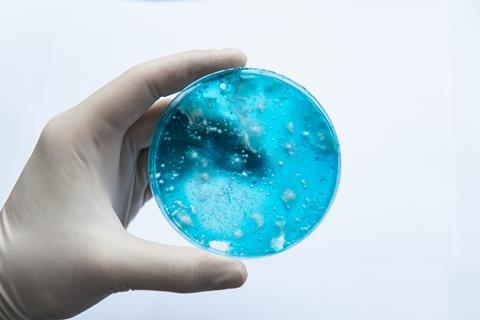
Indeed, exploration of microbial diversity can further revolutionise how food is sourced. Currently, all food products are directly or indirectly reliant on photosynthesis, rendering production vulnerable to extreme weather, soil degradation, freshwater shortages, pests and land constraints. Fermentation processes designed around microorganisms capable of growing on simple feedstocks such as carbon dioxide or those derived from carbon capture using electrocatalysis, represent a food production method entirely decoupled from photosynthesis and thus invulnerable to the same stressors.21 Scaling such systems with renewable energy could expand production capacity without proportionally expanding land use, buffering the food system against climate-related shocks.22 With the collaboration of nutritionists, food scientists and chefs, such technological breakthroughs can be turned into tasty, nutritious, affordable and overall desirable food products – a necessity for any level of impact on the food system.
Fermentation began long before our knowledge of microbes, as a way to make food last a little longer and taste a little better. Today, combined with synthetic biology, it offers a way to redesign how food is produced, where it is made and who it ultimately serves. Designing microbes is only part of the challenge. Designing institutions, infrastructure and governance systems that ensure equitable access and environmental integrity is equally critical. If we treat these technologies not as silver bullets but as shared tools, co‑developed with biomass producers, communities and diverse experts, embedded in local ecologies, we can aim to build food systems that are resilient and capable of nourishing people through the disruptions that lie ahead.
References
- Von Braun J, Afsana K, Fresco LO, et al. Food system concepts and definitions for science and political action. Nat. Food 2, 748–750 (2021).
- Ricciardi V, Ramankutty N, Mehrabi Z, et al.How much of the world’s food do smallholders produce? Glob. Food Secur. 17, 64–72 (2018).
- Tufford AR, et al. A scientific transition to support the 21st century dietary transition. Trends Food Sci. Technol. 131, 139–150 (2023).
- Bodirsky BL, et al. A food system transformation pathway reconciles 1.5 °C global warming with improved health, environment and social inclusion. Nat. Food 6, 1133–1152 (2025).
- Afshin A, et al. Health effects of dietary risks in 195 countries, 1990–2017: a systematic analysis for the Global Burden of Disease Study 2017. The Lancet 393, 1958–1972 (2019).
- The State of Food Security and Nutrition in the World 2020. (FAO, IFAD, UNICEF, WFP and WHO, 2020). doi:10.4060/ca9692en.
- Fanzo J, et al. Sustainable food systems and nutrition in the 21st century: a report from the 22nd annual Harvard Nutrition Obesity Symposium. Am. J. Clin. Nutr. 115, 18–33 (2022).
- Evans A. The Feeding of the Nine Billion: Global Food Security for the 21st Century | Chatham House Report. (Royal Institute of International Affairs, 2009).
- Tendall DM, et al.Food system resilience: Defining the concept. Glob. Food Secur. 6, 17–23 (2015).
- CFS. Voluntary Guidelines on Food Systems and Nutrition CFS Policy Process on the Development. http://assets.fsnforum.fao.org.s3.amazonaws.com/public/discussions/contributions/GT%20ANSC%20-%20Voluntary%20Guidelines.pdf (2017).
- Ledesma-Amaro R, Bamezai S. Sustainable Use and Conservation of Fermentation-Associated Microorganisms within the Agrifood System. (FAO, 2025). doi:10.4060/cd5636en.
- Siddiqui SA, et al. An overview of fermentation in the food industry - looking back from a new perspective. Bioresour. Bioprocess. 10, 85 (2023).
- Cameron DE, Bashor CJ, Collins JJ. A brief history of synthetic biology. Nat. Rev. Microbiol. 12, 381–390 (2014).
- Augustin MA, Hartley CJ, Maloney G, Tyndall S. Innovation in precision fermentation for food ingredients. Crit. Rev. Food Sci. Nutr. 0, 1–21 (2023).
- Mateos Fernández R, et al.Insect pest management in the age of synthetic biology. Plant Biotechnol. J. 20, 25–36 (2022).
- San Juan MG, Bogdanski A, Dubois O. Towards sustainable bioeconomy – Lessons learned from case studies. in (FAO, Rome, Italy, 2019).
- Allais F, Lescieux-Katir H, Chauvet J-M. The continuous evolution of the Bazancourt–Pomacle site rooted in the commitment and vision of pioneering farmers. When reality shapes the biorefinery concept. EFB Bioeconomy J. 1, 100007 (2021).
- Gaffey J, et al. Green Biorefinery systems for the production of climate-smart sustainable products from grasses, legumes and green crop residues. Biotechnol. Adv. 66, 108168 (2023).
- Hendy J, Rest M, Aldenderfer M, Warinner C. Cultures of Fermentation: Living with Microbes: An Introduction to Supplement 24. Curr. Anthropol. 62, S197–S206 (2021).
- Materia VC, Linnemann AR, Smid EJ, Schoustra SE. Contribution of traditional fermented foods to food systems transformation: value addition and inclusive entrepreneurship. Food Secur. 13, 1163–1177 (2021).
- Linder T. Beyond Agriculture─How Microorganisms Can Revolutionize Global Food Production. ACS Food Sci. Technol. 3, 1144–1152 (2023).
- Järviö N, Maljanen N-L, Kobayashi Y, et al. An attributional life cycle assessment of microbial protein production: A case study on using hydrogen-oxidizing bacteria. Sci. Total Environ. 776, 145764 (2021).








No comments yet