



Generative AI can show a product concept before any physical sample exists. The harder question is how it fits the wider development process.
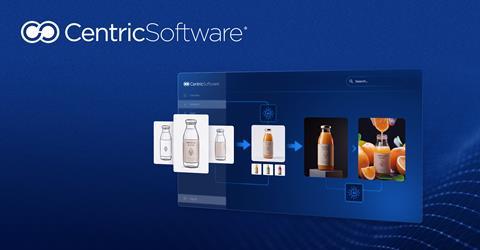
For food and beverage companies, innovation has always involved a degree of uncertainty.
A promising product idea still needs to become something tangible before teams can properly evaluate it. Traditionally, that has meant developing physical samples, reviewing them, refining the concept and repeating the process until a viable direction emerges.
But as product portfolios expand and consumer expectations continue to evolve, teams are under increasing pressure to explore more ideas without adding unnecessary time, cost or complexity to the development process.
This raises an important question: could generative AI change what happens before the first physical sample is created?
Exploring more possibilities before committing to physical development
Generative AI is opening new possibilities for the earliest stages of product development.
Instead of relying exclusively on physical prototypes to bring an idea to life, teams can use AI-generated visual concepts to explore different product formats, flavours, packaging approaches and creative directions much earlier in the process.
A beverage development team, for example, could visualise multiple packaging concepts or flavour directions before deciding which ideas warrant further development. Those concepts can then be shared with R&D, marketing, design and commercial stakeholders, creating a common visual reference for discussion.
The benefit is not simply speed.
It is the ability to explore more possibilities before making decisions about which ideas deserve further investment.
This can create a more iterative approach to early-stage innovation: generate, compare, refine and align – before moving into the physical sampling stage.
From AI-generated images to connected product development
However, generating an impressive image is only one part of the opportunity.
For food and beverage businesses, the bigger question is how generative AI fits into the wider product development process.
A standalone AI tool may help a designer or marketer create a visual concept, but that concept can remain disconnected from the product information, specifications and workflows needed to turn an idea into a commercially viable product.
This is where connected AI becomes increasingly relevant.
When AI capabilities are connected to product data and development workflows, visual exploration can become part of a broader product development process rather than a separate creative exercise.
With Centric AI Studio™ working alongside Centric PLM™, food and beverage teams can bring generative AI into the product development environment, connecting visual ideation with the information and processes teams already use.
That creates an opportunity to move beyond simply asking, “What can AI generate?”
Instead, the focus becomes:
“How can AI help product teams explore, align and develop ideas more effectively?”
What connected AI could enable for food & beverage teams
Integrating generative AI into the product development workflow can create opportunities to:
- Explore more concepts earlier – Visualise potential product and packaging directions before committing resources to physical samples
- Iterate rapidly – Test different flavours, formats, packaging and creative approaches and refine ideas at speed
- Improve cross-functional collaboration – Give R&D, marketing, design and commercial teams a shared visual starting point for discussions
- Connect ideation with product information – Bring AI-generated concepts closer to the product data and workflows required for development
- Accelerate downstream content creation – Give marketing and commercial teams access to visual concepts earlier in the development journey
The result is not necessarily about replacing physical sampling.
Rather, AI can help teams arrive at physical sampling with greater clarity about what they want to develop and why.
The next evolution of product development
The food and beverage industry has always depended on experimentation. The challenge is finding ways to make that experimentation more efficient without limiting creativity.
Generative AI introduces a new layer of digital exploration between the initial idea and the physical product.
Instead of asking teams to choose between creativity and efficiency, it can give them more opportunities to combine the two – exploring a wider range of possibilities while identifying the concepts worth taking further.
But real value will depend on how effectively AI is integrated into existing product development processes.
For food and beverage companies considering where to start, the opportunity may therefore be less about adopting another standalone AI tool and more about identifying where connected AI can remove friction across the product development workflow.
The future of innovation may begin before the first sample ever reaches the development kitchen.
See connected AI in action
What does this look like when generative AI is connected to the wider product development process?
In an on-demand webinar, Centric Software® demonstrates how Centric AI Studio can help food and beverage teams visualise concepts, explore creative possibilities and bring AI-generated content into the broader product development workflow.
Register for our free webinar to discover how connected AI can accelerate food and beverage innovation from concept to shelf.




No comments yet